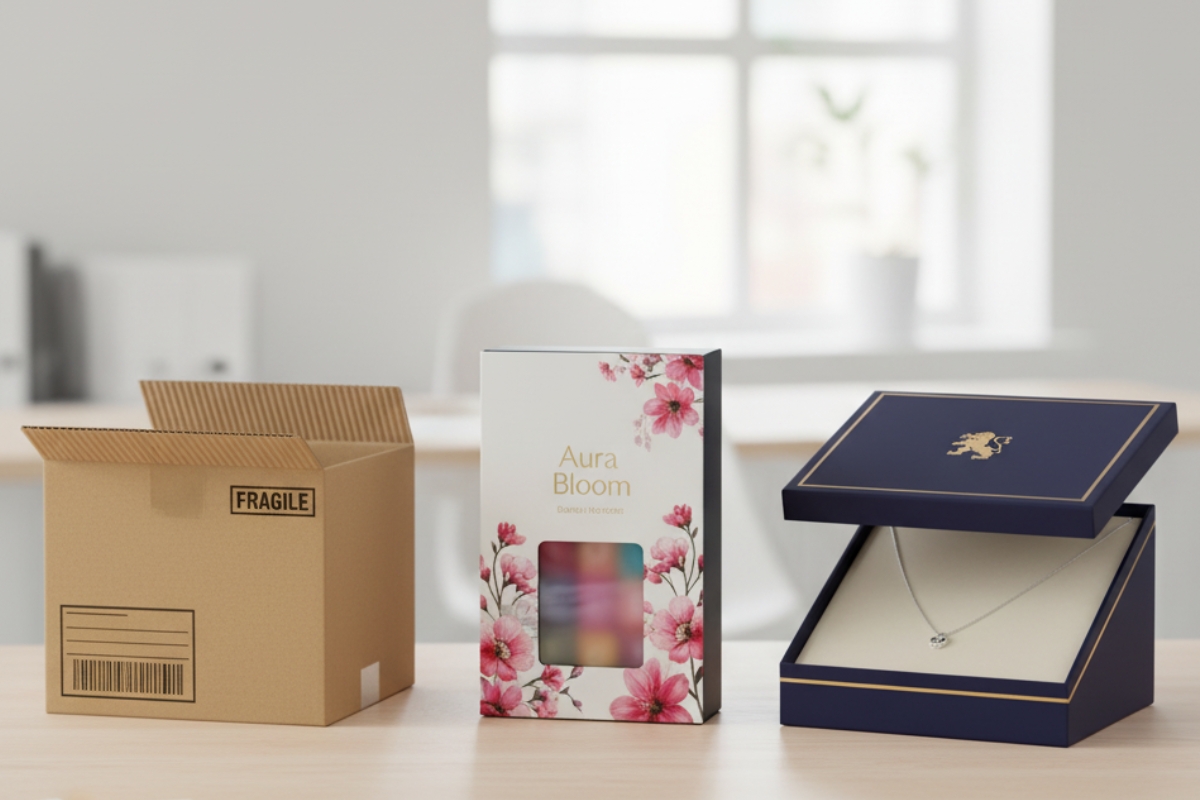
3 Main Types Of Packaging Boxes For Every Business
When it comes to your product, packaging is far more than just a container. It's the first physical interaction a customer has with your brand. It’s your silent salesman, your brand ambassador, and your product's protector.
But with so many options, how do you choose the right one? The world of packaging can be overwhelming, but it boils down to three primary categories. Understanding these "big three" will help you make the perfect choice for your product, brand, and budget.
Here are the three main types of packaging boxes every business should know.
1. The Protector: Corrugated Boxes
What It Is: This is what most people think of as a "shipping box." A corrugated box is made of three layers of paper: an inside liner, an outside liner, and a wavy, fluted layer in between (the "corrugation"). This fluted layer is the key—it provides remarkable strength, cushioning, and durability.
Corrugated boxes can have different "flute sizes" (the thickness of the wavy layer) and "wall counts" (single, double, or triple wall) to provide different levels of protection.
Key Characteristics:
-
Highly Durable: Built to withstand the rigors of shipping and handling.
-
Protective: The fluting creates a cushion that absorbs impacts
-
Cost-Effective: Offers the best strength-to-cost ratio for shipping.
-
Customizable: Can be printed on directly, especially popular with e-commerce "mailer boxes.
Best For:
-
E-commerce shipping
-
Subscription boxes (often called mailer boxes)
-
Master cartons (large boxes used to ship your individual products in bulk)
-
Retail-ready displays
-
Heavy or fragile items that need serious protection
2. The Retailer: Folding Cartons
What It Is: This is the most common type of box you see on a retail shelf. Think of a cereal box, a cosmetics box, or a medicine box. A folding carton is made from a single layer of paperboard or cardstock.15 It's printed, die-cut, and then shipped flat to your business, where it's easily folded (or "erected") into its final shape.
Key Characteristics:
-
Excellent for Printing: The smooth surface is perfect for high-resolution graphics, vibrant colors, and special finishes like foil stamping or embossing.
-
Ships Flat: This is a huge advantage. It dramatically reduces shipping and warehousing costs.
-
Lightweight: Ideal for products that are already in a primary container (like a bottle or tube) or are not extremely fragile.
-
Versatile: Can be cut and folded into countless shapes and styles (e.g., tuck-end, auto-lock bottom, sleeves).
Best For:
-
Almost all retail products (cosmetics, food, pharmaceuticals, software)
-
Light-to-medium-weight items
-
Products where on-shelf presentation is a key part of the sale
3. The Experience: Rigid Boxes (Set-Up Boxes)
What It Is: This is the premium, luxury option. A rigid box (also called a "set-up box") is made from a thick, highly-condensed paperboard (chipboard) that is then wrapped in a decorative specialty paper or fabric. Unlike folding cartons, they do not collapse or ship flat.
Think of an iPhone box, a high-end board game, or a luxury jewelry box. The unboxing itself is part of the product's value.
Key Characteristics:
-
Premium Feel: The heavy, dense construction signals luxury and high quality.
-
Exceptional Durability: Provides excellent protection and is often kept as a keepsake box.
-
High-End Finishes: Perfect for materials like leatherette, soft-touch paper, velvet, and linen.
-
Superior Unboxing: Ideal for creating a memorable "unboxing experience" with features like magnetic closures, ribbons, and custom foam or suede inserts.
Best For:
-
Luxury goods (jewelry, watches, high-end cosmetics)
-
High-end electronics
-
Welcome kits and PR packages
-
Premium gift sets
-
Any product where perceived value is paramount
Conclusion
Choosing the right box is a strategic business decision. It's a balance between Protection (Corrugated), Presentation (Folding Carton), and Perception (Rigid). By understanding these three main types, you can stop guessing and start designing a package that protects your product, builds your brand, and delights your customers.