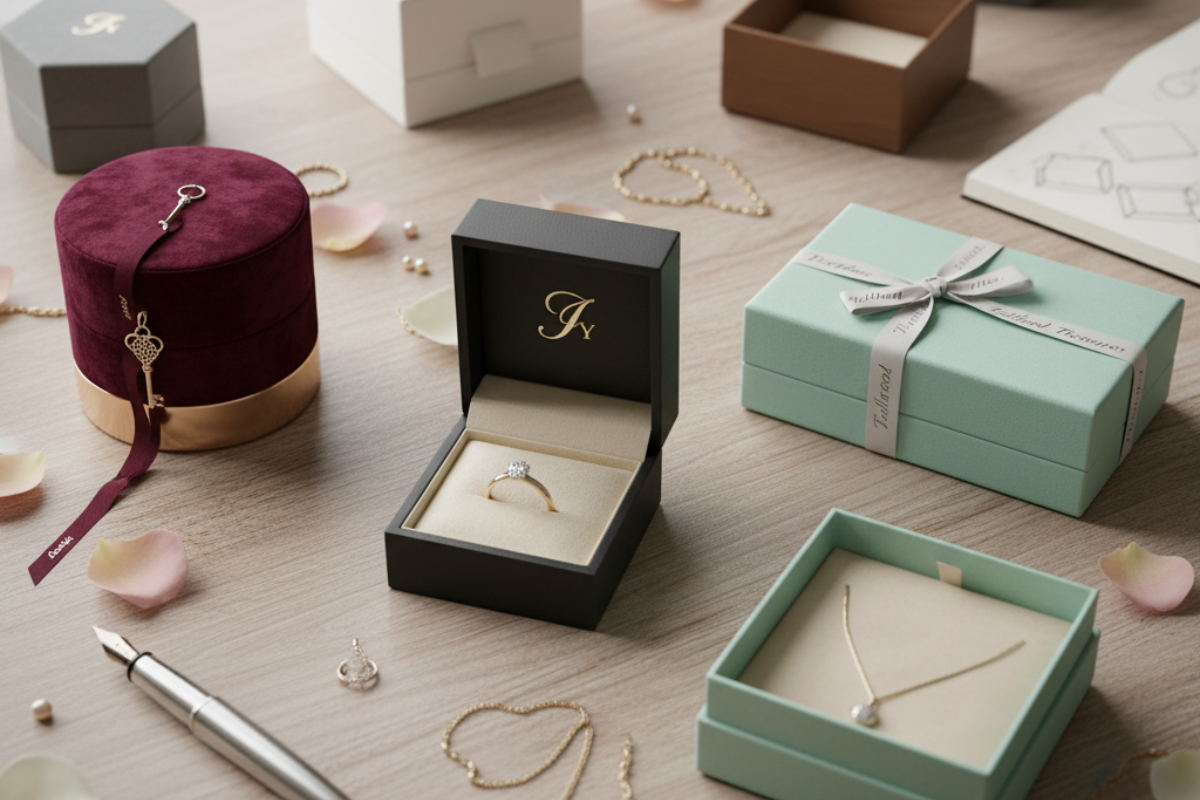
Choosing The Right Materials For Your Custom Jewelry Box
The perfect jewelry box does more than just hold a piece; it protects it, presents it, and reflects the value of your brand. The materials you choose are the foundation of this experience. Here’s a guide to the three main components: the Core Structure, the Exterior Wrap, and the Interior Lining & Insert.
1. The Core Structure: The Box's Skeleton
This is the hidden material that gives the box its strength, weight, and shape.
-
Rigid Paperboard (or Chipboard): This is the industry standard for most high-quality, custom jewelry boxes. It's a highly compressed, dense paperboard that doesn't fold.
-
Pros: Very strong, provides a premium "heavy" feel, highly versatile, creates sharp corners, and is the perfect smooth base for applying exterior wraps and finishes.
-
Cons: Not as prestigious as solid wood on its own (but it's almost always wrapped).
-
-
Wood (e.g., MDF, Pine, Walnut, Mahogany):1 Used for keepsake or luxury heirloom boxes.
-
Pros: Extremely durable, has a classic and timeless high-end appeal. Can be beautifully finished with stains, lacquers, or engraving.2
-
Cons: Significantly more expensive and heavier, which increases production and shipping costs.
-
-
Plastic: A less common choice for custom boxes, but often used for mass-produced, lower-cost items.
-
Pros: Inexpensive, lightweight, and can be molded into any shape.
-
Cons: Can feel cheap and brittle, which may devalue the jewelry inside.
-
2. The Exterior Wrap: The First Impression
This is the material laminated onto the core structure. It's what the customer sees and touches first.
| Material | Best For | Vibe & Feel |
| Specialty Paper | The "All-Rounder" | Highly versatile. Can be matte, glossy, metallic, or textured (like linen or leather). Endless color and printing options. |
| Leatherette (Faux Leather) | Mid-to-High End | Sophisticated and classic. Durable, easy to clean, and provides a tactile, premium feel without the cost of real leather. |
| Real Leather / Suede | True Luxury | The ultimate in luxury. Soft, textured, and unmistakably high-end. Often used for watch or high-jewelry boxes. |
| Fabric (e.g., Linen, Silk, Velvet) | Boutique & Bridal | Creates a soft, tactile, and often romantic or rustic feel (for linen). Velvet gives a very plush, antique vibe. |
| Kraft Paper | Eco-Conscious / Rustic | Natural, minimalist, and signals a commitment to sustainability. Great for artisanal or handmade brands. |
3. The Interior: Protection & Presentation
The interior is arguably the most important part for the jewelry itself. It must be soft, non-abrasive, and secure.
Interior Lining (The soft lining of the box walls)
-
Velvet: The timeless classic. Its soft pile is excellent at preventing scratches and has a traditional, luxurious look.3
-
Suede / Faux Suede (e.g., Microsuede): A modern alternative to velvet.4 It has a finer, smoother texture and looks clean, modern, and sophisticated.
-
Satin / Silk: Very smooth and shiny, often used for delicate items like pearls.5 Can feel very high-end, but offers less cushioning than velvet or suede.
-
Felt: A more budget-friendly option.6 It's non-abrasive but lacks the plush, premium feel of the other materials.
Inserts (What holds the jewelry in place)
-
Foam (EVA, PE, or PU): This is the most common and practical option. A rigid foam base is precision-cut to hold the specific jewelry item (ring, necklace, earrings) securely.7
-
The Best of Both: The foam is almost always topped with a thin layer of velvet or faux suede to combine the soft, luxurious feel with the secure, custom-fit of the foam.
-
-
Paperboard / Cardstock: Often used for lower-cost boxes.8 The cardstock is die-cut with tabs or slits to hold items like necklaces or earrings. It's functional but less protective and premium.
-
Padded Cushions: Small, soft-filled pillows (often satin or velvet) are common for bracelets and watches, giving a very plush presentation.
💡 Key Considerations for Your Brand
-
For Luxury/Bridal: Combine a rigid paperboard core, a leatherette or specialty paper wrap, and a faux suede-topped foam insert. This provides the best balance of a premium feel, excellent protection, and customization.
-
For Eco-Conscious Brands: Use a rigid paperboard core (often available with recycled content), a Kraft paper wrap, and a cardboard insert or a foam insert topped with natural fabric.
-
For Bold, Modern Brands: Don't be afraid of color. A rigid box with a vibrant, matte-finish paper and a contrasting suede interior can make a powerful statement.